
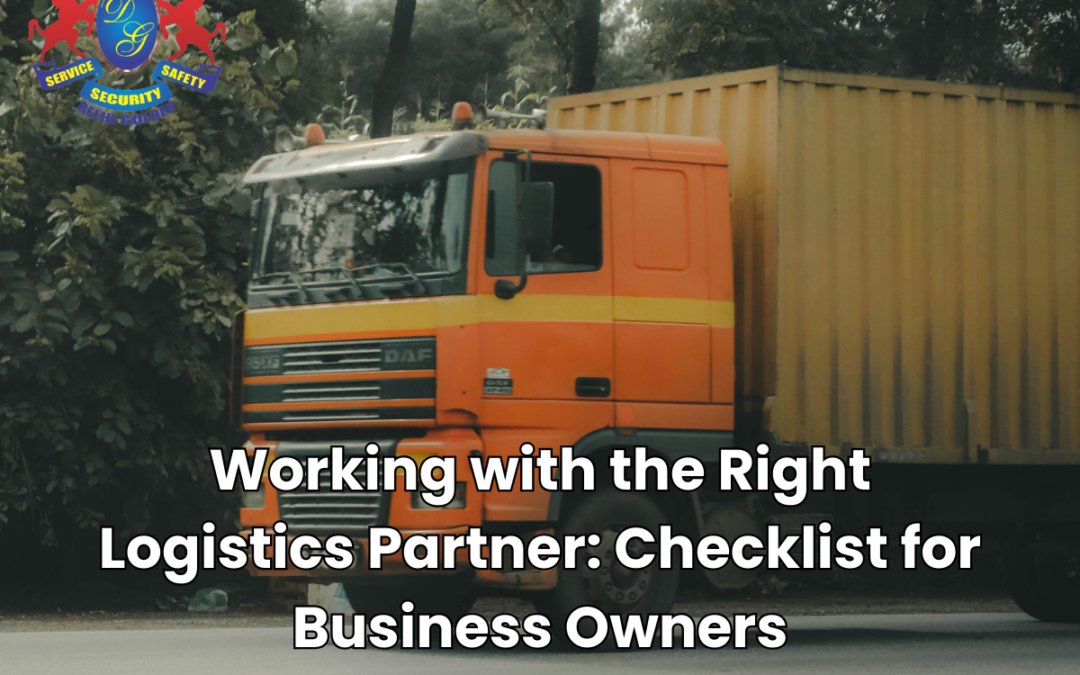
Choosing the right logistics partner ensures reliability, visibility, and growth-ready operations. Use this checklist to decide smarter ways to connect with experts today.
Although the supply chain is sometimes seen as merely a support function, it is in fact pivotal to the overall efficiency of a business. Every step from dispatch to delivery affects the lead times, cash flow, and customer trust. The choice of a logistics partner is not about who is the cheapest or fastest; it’s about whom you can consistently rely on, understand the way they work and who takes responsibility for their actions. This checklist is aimed at business owners who want to make a decision that is both thoughtful and practical, grounded in the realities of day-to-day operations.
Why You Should Give Your Logistics Decisions Proper Thinking
Logistics is the last thing most businesses think about until it goes awry. With customer dissatisfaction just around the corner are, a delayed shipment, an unclear tracking system, or a lack of response. However, what is rarely considered is that logistics partners are your business representatives once your product is out of the door. The way they perform affects the customers’ perception of your reliability.
By having a good logistics system, you are enabling the teams to work with each other more smoothly, the planning will be more accurate and the business owners will be able to focus on the business growth instead of constantly dealing with issues. This is why a logistics partner selection should be viewed as a strategic operational decision rather than a tactical one.
A Business Owner’s Practical Checklist
1. First, Figure Out Your Business Operations
It is crucial to have a good understanding of your current business performance before you start looking at logistics companies. The focus should be on details such as shipment volumes, frequencies, delivery times, and the most common points of congestion. People who are responsible for dispatch, loading, and customer follow-ups should be consulted as they usually have a very clear picture of where delays or misunderstandings happen.
One of the benefits of this kind of self-analysis is you get a lot of clarity and, at the same time, it shields you from the lure of a partner who simply presents a nice portfolio but has no clue about your challenges.
2. Reliability is More Precious Than Speed
Speedy delivery gets the spotlight time and again, yet it is the predictability that ensures the stability of operations. A logistics partner that consistently meets the delivery deadline is twice as good as the one that might once in a while offer super fast delivery but is mostly late.
Find out what delivery commitments are based on, how postponements are communicated and whether there are alternatives in case of emergencies. With predictable services, a company is able to organize inventory, billing, and customer communication much more smoothly.
3. Transit Visibility Has to Be There
Business owners, as well as end customers, expect to be able to track a shipment’s whereabouts and estimated time of arrival. In the absence of such information, customer care is overburdened with inquiries that could have been avoided while planning becomes more of an emergency reaction.
Offer shipment updates through your logistics partner that eliminate uncertainty instead of adding to it.
4. Flexibility Reflects How Businesses Run Today
Consider unpredictable nature—no business works according to a pre-determined schedule. This means that orders go up and down, pieces with tight delivery deadlines come in and special delivery instructions have to be worked through. Your logistics partner should not only be capable of dealing with such fluctuations but the entire process should be stress-free too.
Flexibility in terms of load sizes, timing and frequency of requests is not an “optional feature” – it is the very essence of a healthy long-term partnership.
5. Working With the Processes Should Be a Pleasant Experience
One of the biggest misconceptions is that logistics has to make operations more complex. Booking, documentation, billing, and confirmation steps must be clear, simple, and easy to follow. If coordination becomes difficult or overly manual, it adds pressure on teams and increases the chance of errors.
A reliable supply chain partner not only fits in effortlessly with a company’s existing workflows but also understands the company’s existing operations.
6. The extent of coverage should align with present and future requirements
Even though your business may presently only be serving a small local area, it is highly likely that your business will grow significantly faster than you anticipate. Continual changing of logistics partners can cause significant interruptions to your operations and customer relationships.
A partner with a well-developed network of regional connections covering the main trade routes, including the movement of goods between central and northern markets, is the one that will enable you to grow smoothly as your volumes increase.
7. Safety and Accountability are the Safeguards of your Business Value
Each shipment represents money and carries the expectations of the customers. Having explicit procedures for the care of goods, verification of delivery, and providing a flawless record are the means by which disagreements and losses are avoided. The sense of responsibility gives the foundation for trust to be built between two parties and guarantees that the problems are solved in a fair manner when they occur.
8. The quality of support becomes very important when things go wrong
Sometimes even the most perfectly planned logistics operations face delays that are caused by the weather, traffic, or problems with the operation. The factor which distinguishes one partner from another in such situations is how fast and how well the partner responds to and solves problems. A logistics partner should have an open line of communication and should be willing to acknowledge his/her mistake instead of blaming others.
Effective customer service will keep the stress level low during disturbances and will enable the business to continue to have a good image in the eyes of its customers.
Getting the Most Out of Your Relationship With Your Transport Partner
Companies that regularly transport goods need a logistics provider who is aware of the limitations of the real world and has good operational discipline. Delhi Golden Transport Service collaborates with companies to facilitate the movement of goods across well-established regional corridors, giving priority to consistency, well-defined coordination, and reliable execution rather than on short-lived promises.
Conclusion
It is not about simply ticking boxes when you choose your logistics partner; it is about choosing one that fits perfectly with your way of doing business. Trustworthiness, transparency,
adaptability, and responsibility substantially outweigh the use of fancy words in advertisements. Business owners who make it a habit to consider these things go on to create stronger business systems and experience less unintended pressure on their teams.
When logistics runs silently and systematically behind the scenes, businesses become capable of offering excellent services to their customers and growing with complete assurance.
Moving goods between Indore, Delhi, Bhopal, or Raipur? Get in touch with Delhi Golden Transport Service 9993205906 for consistent transport support.