The Origins of “Horn OK Please”: The Integration of a Phrase in India’s Road Culture.
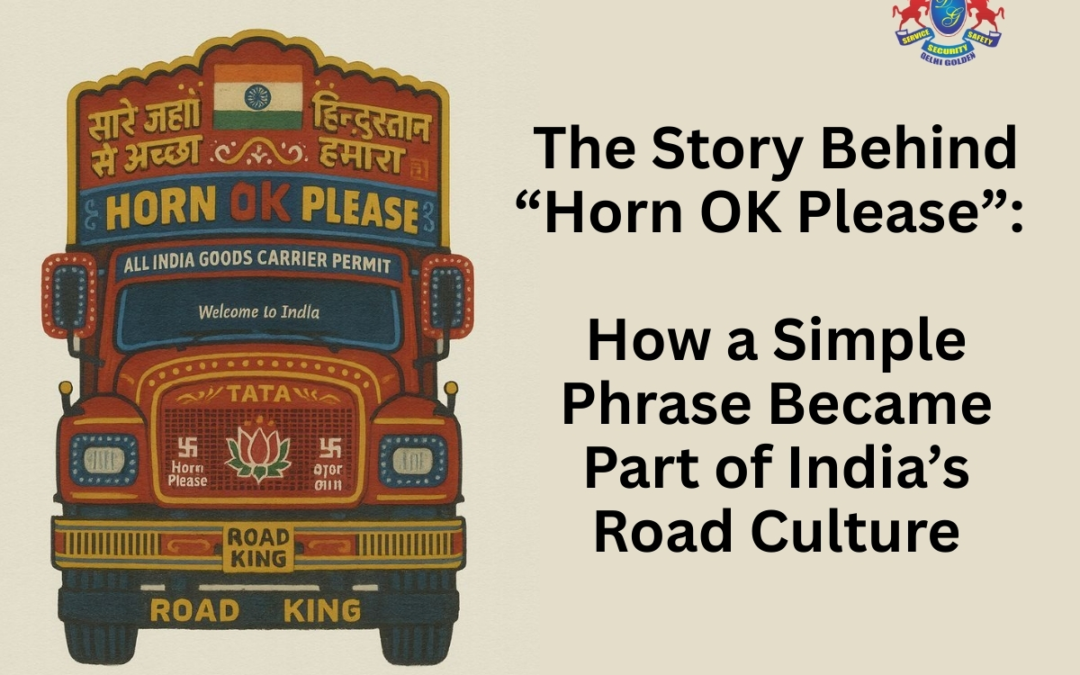
On every highway in India, you will see the same phrase printed on the BACK of every truck: “Horn OK Please”. It’s common, and together with the diverse country, the phrase and the design on the trucks changed regionally over the years but didn’t stop being a staple part of the Indian transport culture, even without legal contracts to paint trucks this way.
Over the years, the phrase has raised the curiosity of the Indian public and outsiders. Why is the phrase written this way? What does the “OK” signify? Why has this been in circulation even though the auto industry has modernised vehicles with mirrors on the sides, built-in indicators on a dashboard for the driver and vehicles with a lot more safety? The explanation lies in a combination of old driving practices, communication habits, and the growth of the truck transport business in India.
The Birth of “Horn OK Please” as an Icon of the Highways
1. A Simple Safety Instruction for Overtaking
In India’s early truck transport years, modern standards didn’t exist as they do today for trucks. Roads were narrow, and visibility was limited. Many of the early trucks in the fleet were built without reliable side mirrors, and rear visibility was dependent on sound. The driver was often blindsided with no idea when one of the other vehicles was about to overtake. The phrase “Horn OK Please” worked as a safety communication tool.
The initiative was simple:
- The vehicle behind is required to honk when overtaking.
- Hearing a horn, the truck driver behaves positively to keep his lane.
The truck transport company ecosystem adopted this message widely. Painters began including it as part of the standard truck design, and over time it became a familiar part of the highway experience.
2. Origin Theory: “On Kerosene”
One theory is that this message originates due to a fuel scarcity in World War Two. Diesel was more valuable; many trucks that transported goods were operated with more volatile kerosene. It was said that trucks with a warning displayed were “on kerosene”, which could have been shortened to “OK”.
This warning was then combined with “Horn OK Please”, which became a safety practice.
3. The TATA “OK” Soap Theory
Another popular theory comes to mind, which has to do with marketing. The TATA Group produced a soap called “OK”. Many trucks, which were designed by TATA, marked their vehicles with “OK”, as it became a moving advertisement. Eventually, the campaign ended, but painters kept the logo, meaning they continued placing it. It became the message that we have today.
4. The Purpose of the Phrase Today
Despite the addition of mirrors, reflective panels, and indicators, Horn OK Please is still present on trucks today because of the following.
5. Cultural Identity
Indian truck art incorporates religious symbols, decorative writings, and words in vibrant colours. The phrase fits in well with this art style.
6. Unchanged Practice
Many truck owners and artists consider the phrase a part of the truck’s rear panel, and as a result, truck paintings would seem incomplete if this phrase were painted.
7. Cultural Recognition
Horn OK Please has become a recognisable and iconic part of the Indian culture on the road and has circulated in popular culture, including photography, films, and art.
8. Cultural Resistance
In 2015, the phrase was almost completely removed by the government of Maharashtra as a measure to reduce the public nuisance of noise pollution. However, the phrase’s presence on trucks remained due to its deeply rooted cultural usage.
What the Phrase Signified in Road Communication
Before structured logistics systems and modern road infrastructure, honking was the easiest way for drivers to alert each other.
- The phrase created a shared understanding:
- The truck behind the honk.
- The truck driver sees the honk and keeps his lane.
- This was especially critical in long distance trucking logistics, where the truck driver would not have visibility in the dark or in rural stretches of road.
Even though its functional purpose has decreased, the message remains symbolic of a time when communication relied more on instinct and simple phrases than technology.
FAQs
1. Is “Horn OK Please” legally required?
Tradition has kept it alive, but there are no laws in India that officially require this phrase.
2. Why do trucks still display it despite having mirrors?
It is a truck art culture. Many drivers think of the truck looking incomplete, like it has a missing piece.
3. Was there any real theory or explanation for “OK” other than On Kerosene?
It is one of the theories that are among the least verified, like that of TATA soap.
4. Why did the government attempt a ban?
In support of noise pollution control. The phrase was in direct opposition to road safety initiatives.
5. Is the phrase still useful today?
In a practical sense, no. Culturally it is still a strong part of India’s identity on the highway.
Need Reliable Goods Transport?
For safe, punctual, and trustworthy movement of goods along the country’s major highways, Delhi Golden Transport Service is a trusted partner.
Our team provides seamless service for businesses needing a transport service, a truck transport company with experience, and long-distance logistics solutions. Delhi Golden Transport Service (DGTS), Reach out today: 099932 05906. Experience the best delivery service. Your products will be handled with care. Get direction here, https://share.google/tWzlPPQ6Q4pAhH8cJ